


Short dispatches from our travels in less than 800 words.
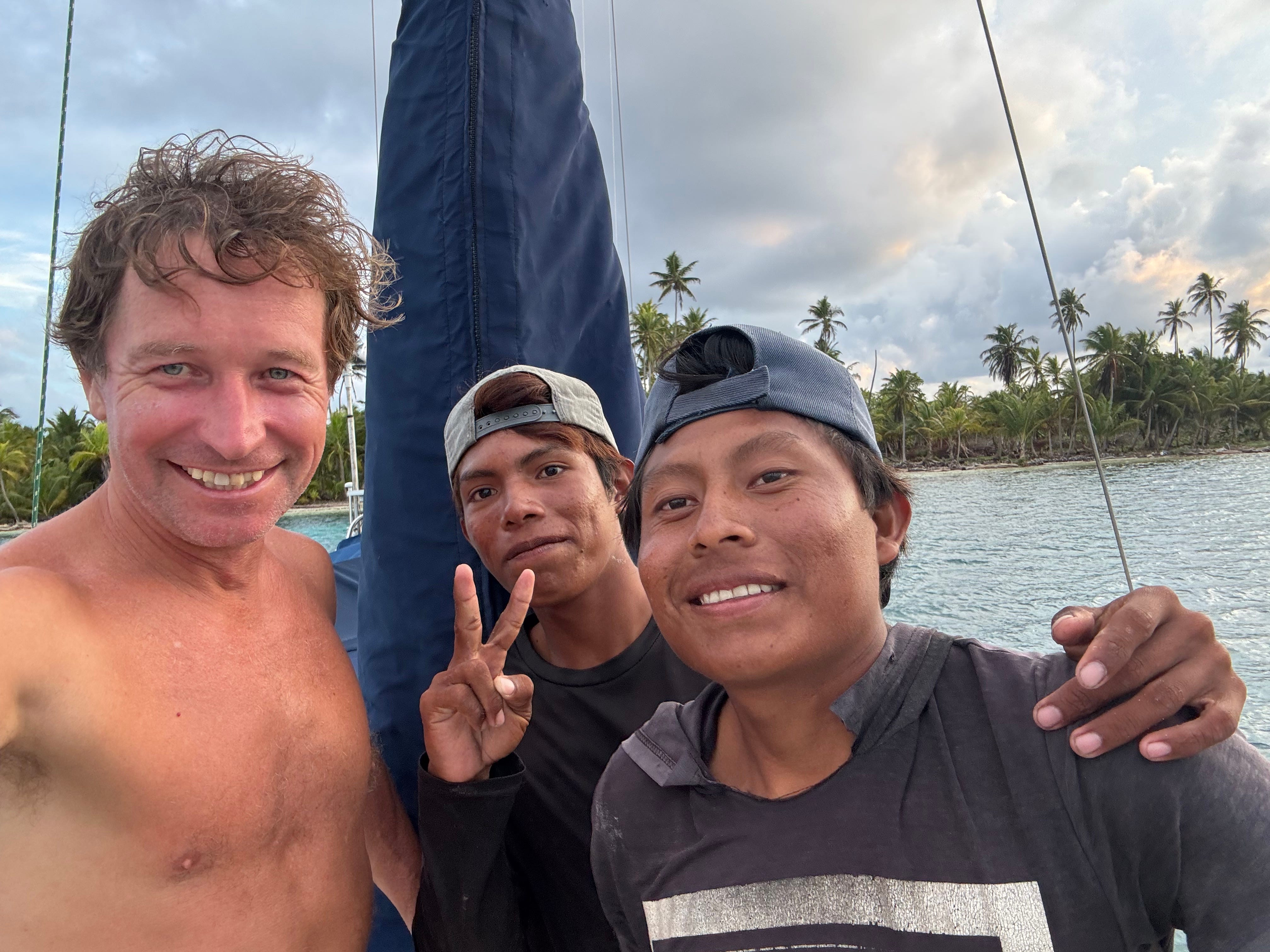
We meet the indigenous men soon after we drop anchor at Banedup. It is a small uninhabited island in the Holandase system of outer reefs in Guna Yala, North of Panama. The men are young - almost boys, short, skinny, fit, and dark-skinned. Twenty and eighteen, I learned later. Will the dog bite, they ask us when Bèlá Flek runs by their cayuco. Or, that’s the question I answer. Their voices are soft, the Spanish is accented and hard for me to follow. The words run together. The endings fade to a mumble.
Two high bundles of thin sticks are piled in the front and midship of the canoe. The bundles weigh the boat down to within an inch of swamping. They seem unconcerned. The man at the front lifts a plastic three-liter jug.
Do you have any water?
The day is hot. They swung machetes all day to gather wood. I wave them to follow my paddleboard to our sailboat.
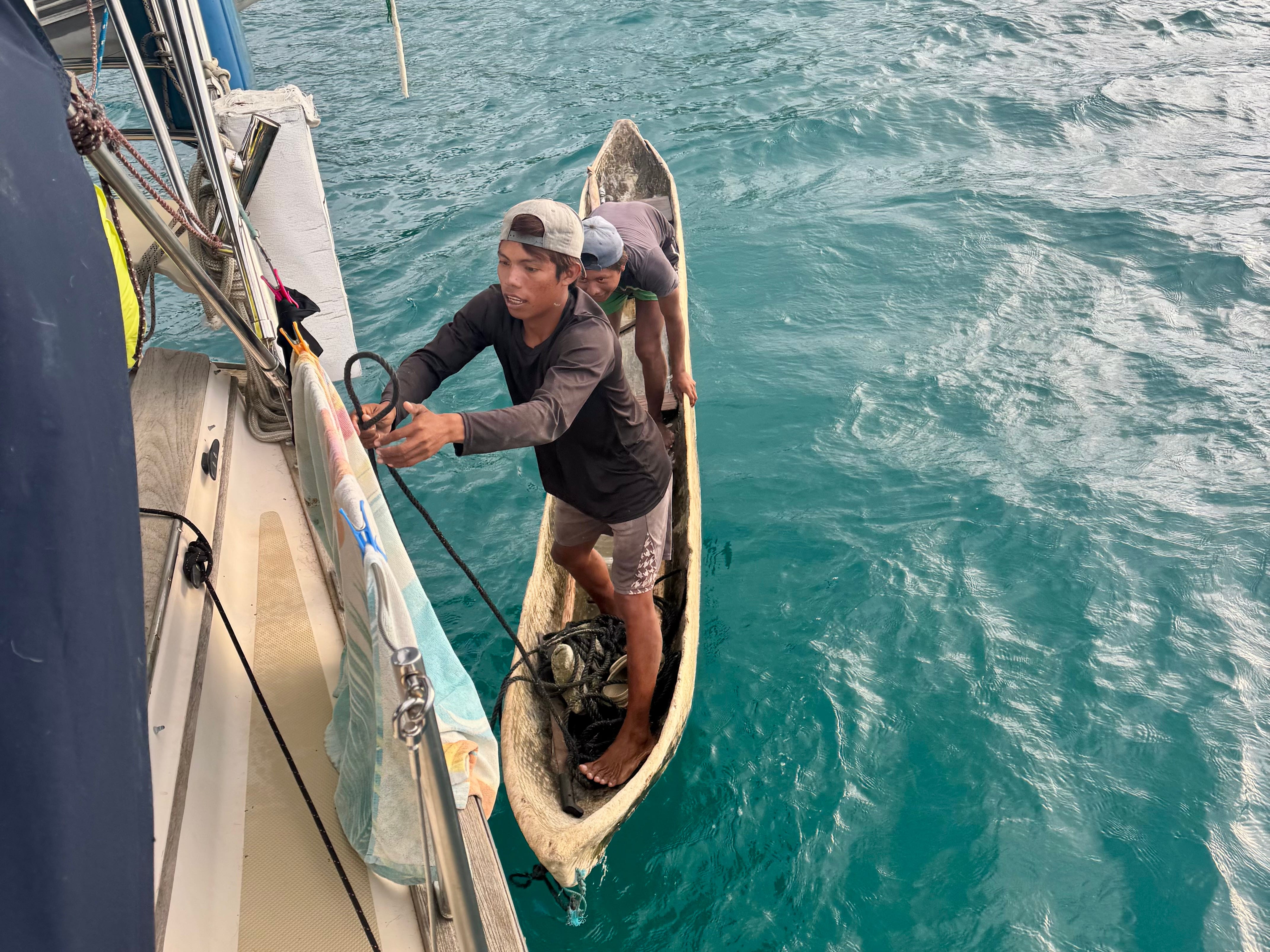
I fill the two jugs from a filtered faucet. What is the wood for? I ask them.
For cooking. They paddle off.
I wonder if they gathered more than the boat can carry. But they cover the mile to their island without trouble.
The next afternoon, I hear commotion outside. The dog dashes upstairs, and I follow him up to the cockpit. The youth are back. They have a pile of coconuts stacked at the front, and a box of fruit. Regalos - gifts, they say, and pass me a few avocados and four handfuls of limes. I see two empty water jugs and ask if they want a refill. They nod. They are Y and S.
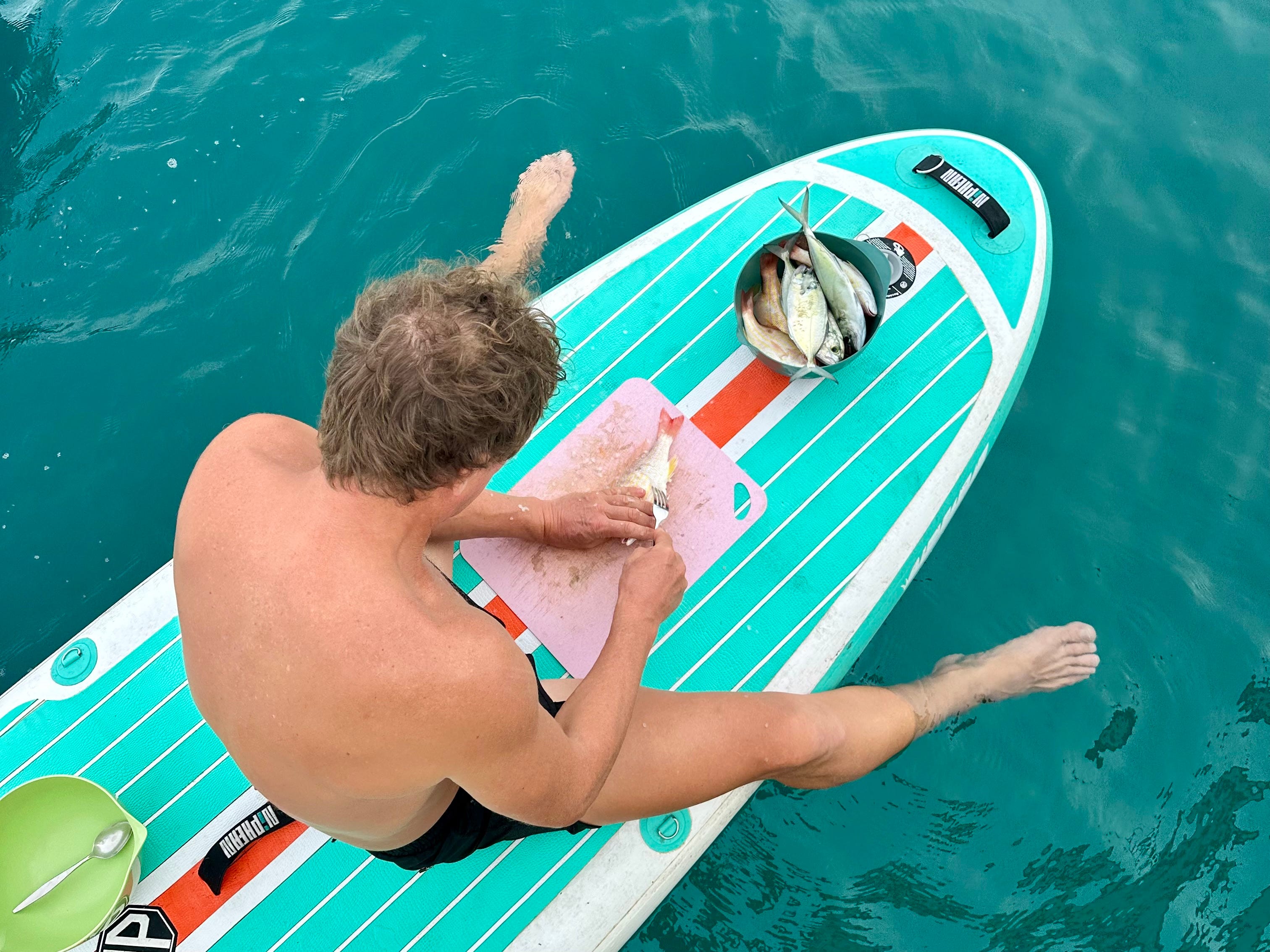
The next day, they stop with gifts of fish: Pargo Rojos, a local variant of small snappers, and Urals, a small version of jacks. We trade water for fish. I ask about a home-made spear in the cayuco. What reefs do they fish?
You want to go fishing? Y asks. I nod. We make plans to meet on their island at seven am. I refill their water, and they paddle home.
Later that day, I mention the gifts to another sailor.
The locals stop by and ask for water, he says. But we don’t have much during the dry season, not enough to share, so they stop coming after a while.
The islands do not have natural sources of fresh water, except for the rain. In the dry season, the sky can stay blue for weeks without a drop falling. There is plenty of water on the mainland ten miles away, but it is costly to bring out by boat. Many sailors buy it from local botteros. Locals can’t afford it, so they conserve it, hope for rain, and occasionally forego it for days, drinking coconut water from the plentiful palms.
We have a desalinator on board, a watermaker, as it is commonly called. We make 150 liters of fresh and clean water each hour when the sun is charging our batteries. We refill our tanks every three days. The water is easy for us, and it makes the trade with the boys feel lopsided in our favor.
But we both barter in what is abundant. To us, it is water; to them, it is resources of the land and sea. They gather boxes of fruit and catch fish at the cost of their time. It is a fair trade.
At seven o’clock the next morning, I pull up the dinghy to the ocean side of the island. I walk the beach looking for the boys. A few cane shacks with thatched roofs are built every hundred meters. They are in pairs, doors facing each other, the windows turned to the ocean.
I see Y and S ahead. They grab the spears, and we motor my dinghy behind a set of islands where the reefs steeply drop twelve meters to the sand. Fish, lobster, calamari. They are both shivering after two hours of diving. I am a bit cold as well.
When I drop them off on the island, they promise to come back with coconut water for drinking. Y’s grandma yells to the boys, don’t forget to ask for water, so I can cook your food.
If you liked this story, please Like and Restack. It help a lot with reaching new readers. Thank you!
What an amazing experience. This is why we travel! It’s for encounters like this.
Love this.