

Logbook: The Ferry to Cochamó
Expectation, frustration, and a better day than planned...

Logbooks are informal dispatches from us when we are actively traveling. Quick, unpolished, and immediate for a sense of what is around us.
We leave for the Cochamó Valley at seven in the morning. “They may not let us in,” I tell Alex, “but the drive along may be worth it.” I show her photos and the map. She sips coffee, thinks, then nods. I know she is thinking this trip should have been planned weeks ago.
Cochamó Valley is the Yosemite of Northern Patagonia. Green, steep mountains transition to granite domes forming a narrow valley. But there are no crowds, no tour buses, just metered foot traffic and horse convoys.
The entry into the valley is eighty-seven kilometers from us. It would be an hour drive on a regular highway, but we must take a ferry across a barranca, then a curvy gravel road around the fjord. Maps forecast a two and a half hour trip. We must be on the trail by nine-thirty to get the permit for the backcountry. It will be tight.
The ferry terminal is only seventeen minutes away. When we arrive, the ship is there, and the cars and trucks are driving up the lowered ramp. The dock master waves the pickup in front of us to board, then raises his hand to stop us. We must wait for the next ship, forty-five minutes away.
I want to scream and pound the steering wheel in frustration, but keep it inside. That pickup passed us on the road a minute ago. I laughed at the pointlessness of his move. “He passed one car to be behind four more cars ahead. What a moron!” I said to Alex. Now he is on a ferry, and I am waiting for the next.
This almost certainly kills our plans. Yet, we choose to try. I exhale my tension. The drive itself is worth it, I tell myself. The surrounding mountains are unlike any I have seen.


On the next ferry, we eat empanadas and drink coffee. Alex takes photos of the barranca unfolding around the peninsula. Of the sun, climbing over the snow of volcanoes behind the front range of the fjord. Of the other ferries, carrying fifty cars the other way.
I fight my tension. The drive itself will be worth it.
The road to Cochamó is gravel. It is one-and-a-half twisty lanes, but switches to one lane on narrow bridges. I learned to drive on roads like this in Siberia. Still a kid sitting on a pillow, I learned to avoid branches and potholes. Then, when older, to catch the car’s drifts in the corners and feel the wheels regain traction on the hills, to left-foot brake through the curves. My dad sat in the next seat, nodding and giving instructions like a rally co-driver.
The road is empty. We zoom around the curves, throwing dust. This is the best morning, I smile. Alex points to a vista ahead and asks to stop. To stop? We hardly have enough time! But I pull over. She takes photos from the edge of the road. Steep mountains rise from the cold water on the opposite side. The fishing boats are laid up on the dirt sea bottom at low tide next to us. A small house at a distance. One boat is working around the aquaculture buoys. Its low rumble is the only soft noise in the steep barranca. A human noise, but it seems to belong.
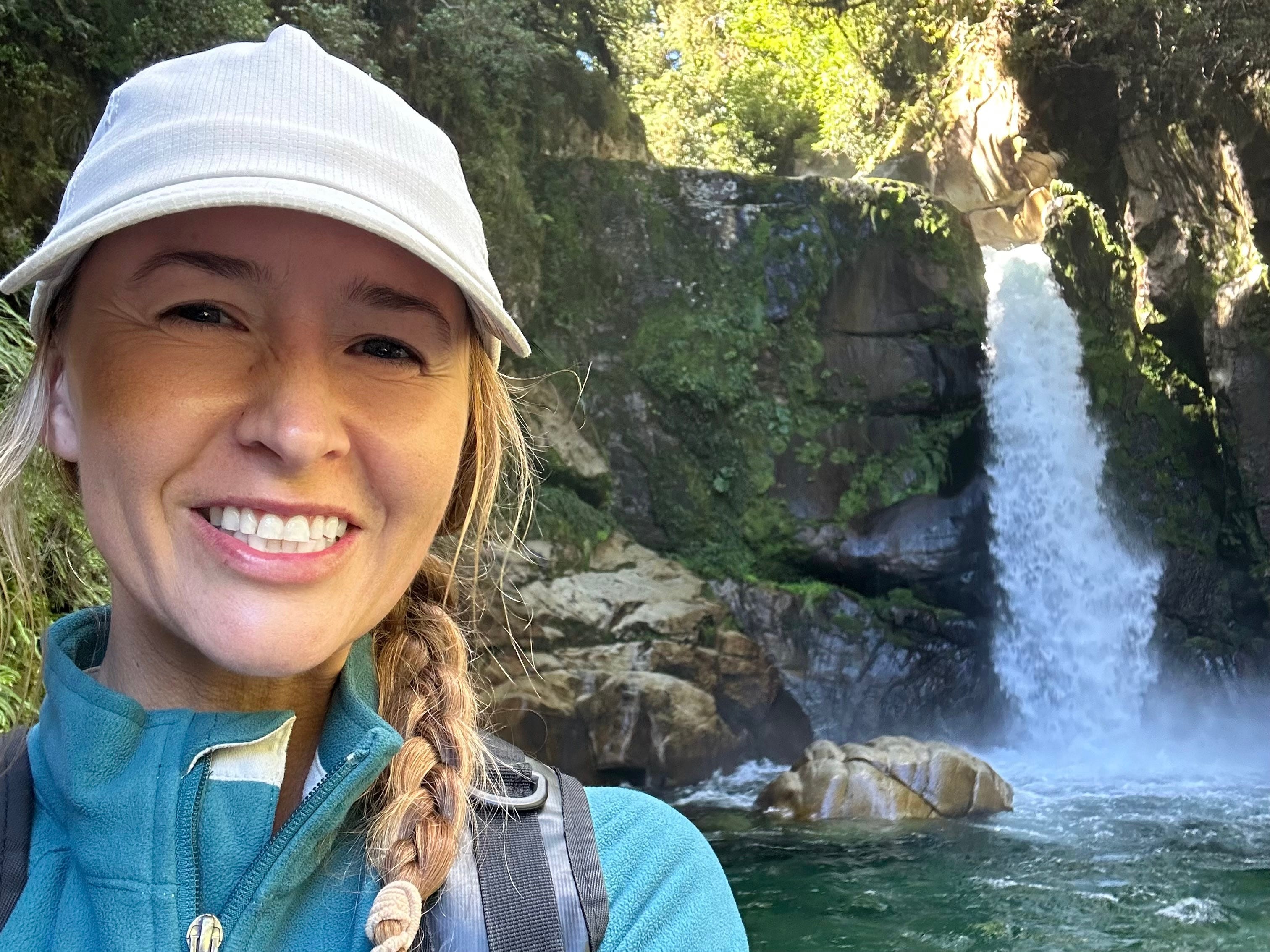
Two hours later, we are at the park, and we are late. We drive past backpackers and a six-horse convoy into a small grass parking lot. A young couple is the attendants. They are eating lunch, but are not unhappy to see us. Yes, we are late, the woman confirms. We can still go to the park check-in just up the trail, to try for a pass, but the rangers have been strict. I must look like I am about to cry because her face softens, she takes my phone, and returns it with a map on the screen. “Go there. It is a beautiful waterfall.”
We get to it after an hour of climbing. A Chilean family is there watching the cascade. The elder grandfather and grandmother are in swimsuits and jump into the frigid water. They hoot and laugh. The mother and the kids watch and taunt them.
We talk to them later. They are farmers from the other side of the range. They drive here, sometimes, for the beauty. Grandfather tells us stories. He is soft-spoken and hard to understand. But we try. The young boy’s eyes grow wide with excitement when he learns we are from the United States. To him, it is a land of dreams. He does not follow the news. He peppers us with questions and invites us to join the family for food. But we have volcanoes to see, and a long drive back. We thank them.
“Did you have a good day?” The grandmother asks.
“Wonderful,” we say.
It is fine not to get what you want. The day will take its own shape and imprint something wonderful on your memory. If you let it.
Please Like and Restack. It makes a huge difference in helping us reach new readers. Thank you for your help!
That's a great story. I was hoping that the rangers would give you the permit. But you got to do something fun anyway.