


Logbooks are informal dispatches from us when we are actively traveling. Quick, unpolished, and immediate for a sense of what is around us.
The people on the streets are young. Valdivia, Chile, is a university town. Women are in shorts and sweaters. Men are in shorts and sweaters, too. Boots, tennis shoes, no flip-flops. They are walking in groups across the bridge, along Main Street, from the river waterfront to an outdoor concert playing behind Bar 55. The fans are against the stage and all the way back to the entrance of the park. It is too packed for us.
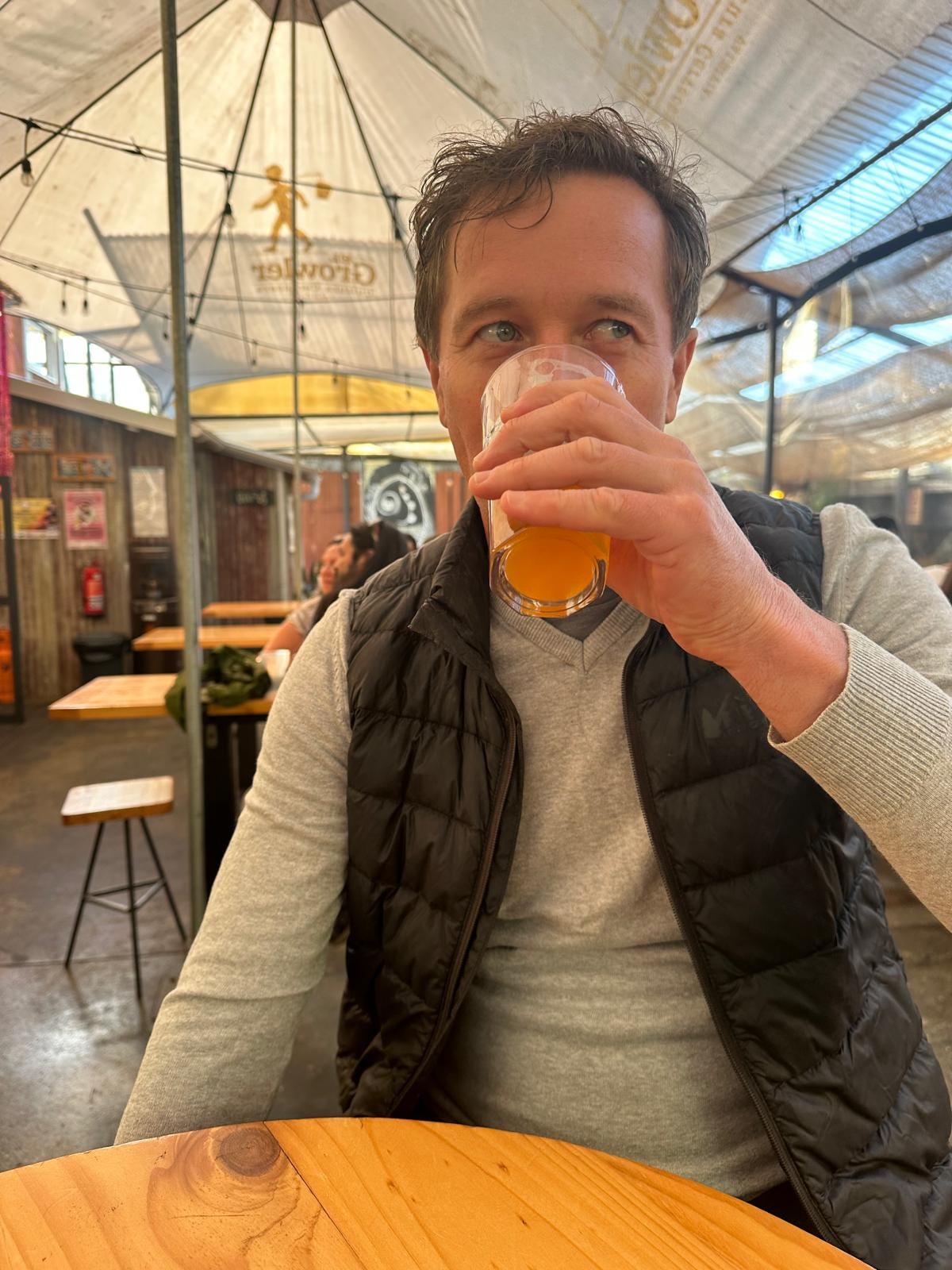
The air is cold, although it is summer. The town sits at the mouth of the Valdivia River and the Pacific Ocean. The ocean keeps the weather comfortable for the locals. But it is too cold for the two of us from the tropics. I zip up my down vest.
We almost skipped it. Valdivia was not on our minds when we thought of the trip to Chile. Nor was it on the main route: Santiago and wine in the North, the Volcanos and Northern Patagonia in the South. But Alex noticed that Valdivia is a microbrew town. Three waves of German immigrants influenced the beer culture here since the 1850s. The detour would add two hundred kilometers to our travels, but we are willing to drive for good IPAs.
We split from the crowd and turn to El Growler. The brewery’s public space is a courtyard. A food truck and a separate trailer for the beer taps are under the tent roof. The post-college crowd fills most of the tables. A few tourists are here too. The tourists fumble through the menus. The locals order what they know without looking. There is a noisy buzz, a rapid chatter of Chilean Spanish. I order a small pour of West Coast IPA. Alex gets a juicy hazy. We see no reason to leave.


The next morning, I know we tried more beer samples than we should have. We want an easy day and drive along the river to the coast, fifteen minutes away. The Valdivia River widens to a large bay and meanders between steep hills, then spills into the cold Pacific Ocean. The road hugs the coastline, the tight curves relax through hamlets. Homes line the hills. Moored fishing boats line the shore. They are reminiscent of the lobster boats we see in the northern hemisphere, but the fishing deck is up front.
I have driven through a similar scene on the coast of the Pacific Northwest. Similar curves, hills, homes, and boats. Only the cars are different, and full public buses are part of the traffic. No buses were on the coast of the Pacific Northwest. People are expected to fend for themselves.
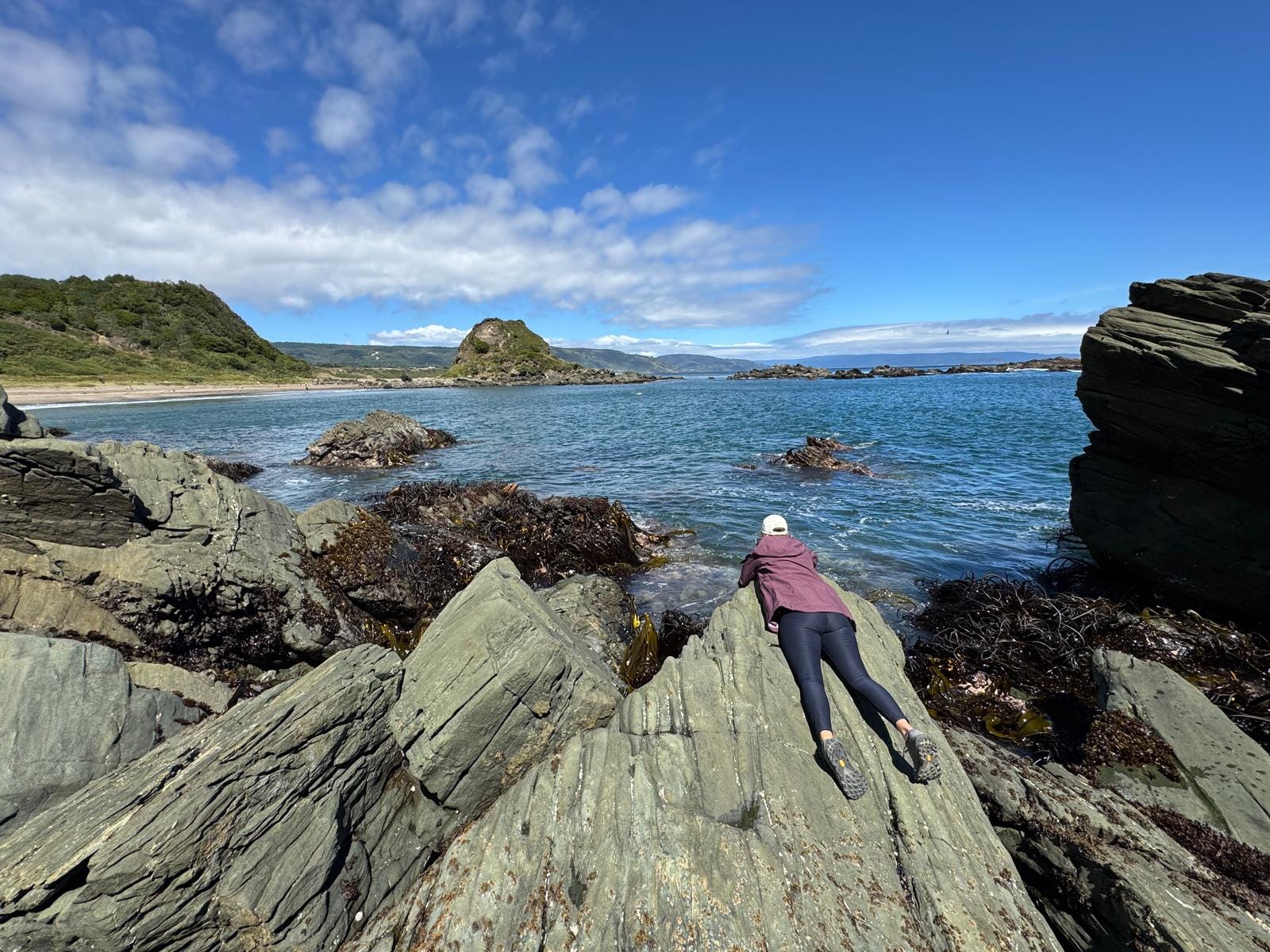
We park and descend towards the beach. The locals are in their bathing suits on the sand. I see swimmers in the bay. I am in pants, long-sleeve, and a down vest. It is cold. I convince Alex to climb over the boulders with me, around the bend in the coastline. The sea-otters gather there, on the rocks or on the mats of kelp just meters offshore. But the otters are not there, only rock and the cold Pacific.
Please Like and Restack. It makes a huge difference in helping us reach new readers. Thank you for your help!
Did you stop in to Igor's for a pint or a snack?! I like this logbook format a lot.
"El Growler". I like it.