


Logbooks are informal dispatches from us when we are actively traveling. Quick, unpolished, and immediate for a sense of what is around us.
Valparaiso is chaos. People squeeze past each other on steep stairs. Cars brush mirrors on the narrow streets. Tires slip and scrape against the cobblestones, bump against the tight curbs.
We are on the third loop around the same neighborhoods, climbing hills and looking for an opening among the tightly parked cars. But we find nothing after twenty minutes of driving. I duck into a side street where I don’t think we have yet gone. Then I recognize a wall painting of a detective mouse talking to a criminal dog, both human-sized, and intent on their conversation.
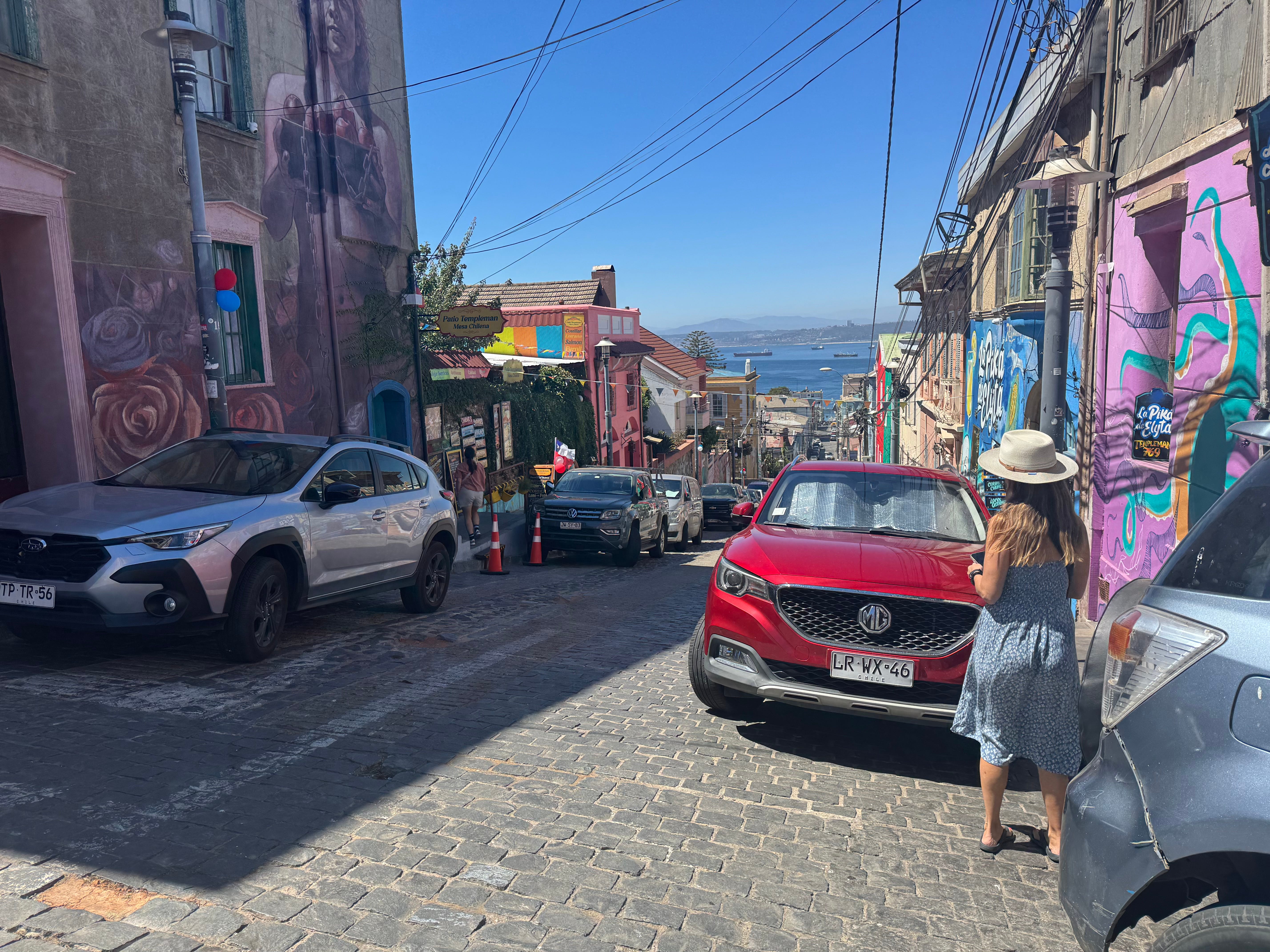
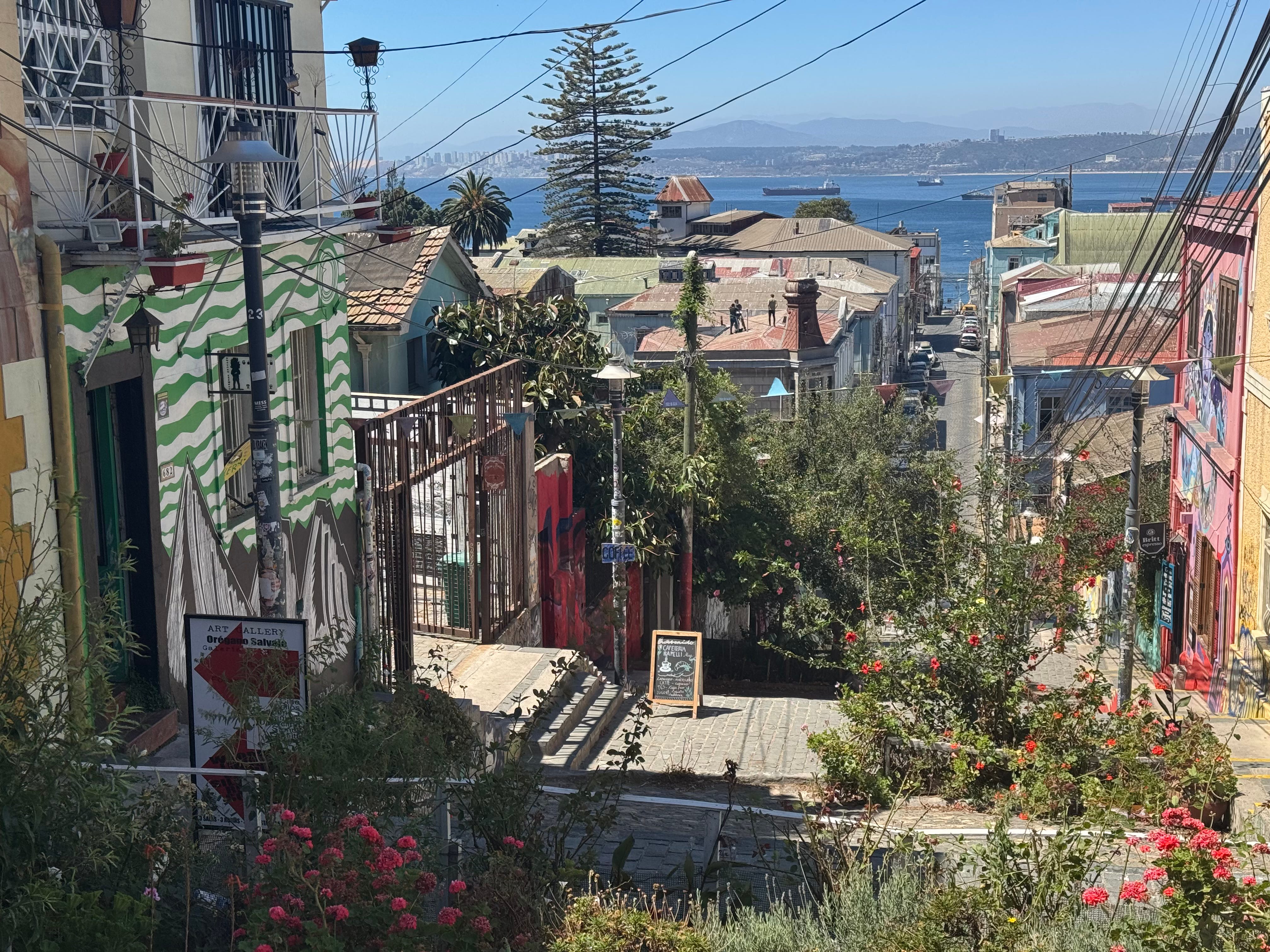
Maybe this street? I turn, then brake to stop. Many streets in the hills are one-way, but how can you know without clear signs and with the parked cars facing in both directions? But we are already committed, so we drive on and meander among the painted homes. I squeeze onto the curb to let a delivery van pass. It shoots past us down the cobblestones without slowing. My heart rate spikes.
“He still had his mirrors on,” I tell Alex with a forced smile. “The delivery driver. Probably knows how not to crash on these streets.”
We find a spot at the very top and park. The views are focused by three-story ancient buildings on each side of the street, but they open wider as the hill falls away. The container ships with familiar names of Maersk, Cosco, and Hapag-Lloyd are anchored throughout the bay. Tugs or fishing boats traverse the water, their wake contrails paint a road in the sea. The distant homes and high-rises across the bay climb their own hills.
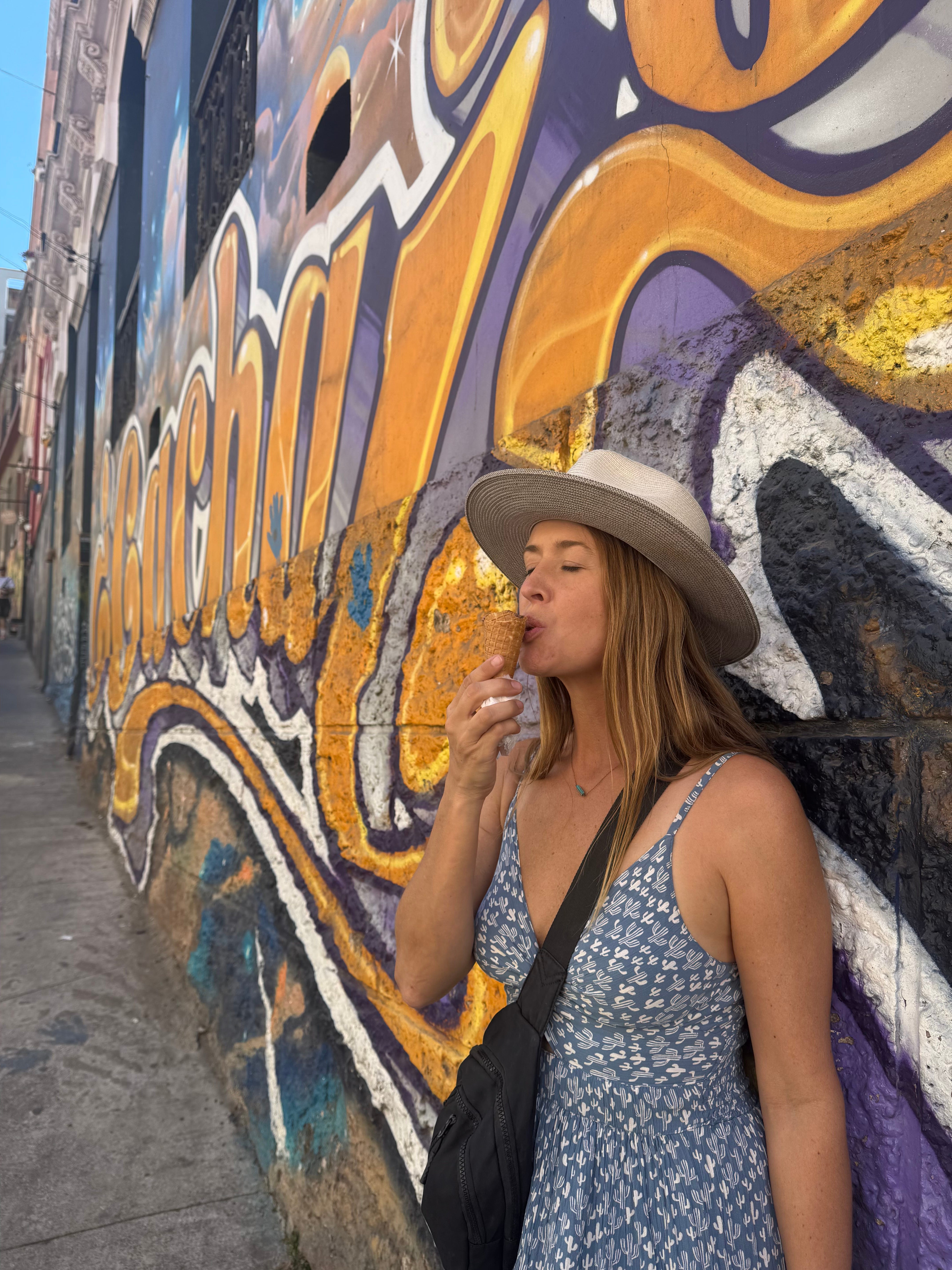
Alex says she wants to walk down to the port. I say I want to find a hat. We agree we both want a gelato. We walk the streets along the shops and restaurants. I don’t see the hats I like. But we find an excellent gelato. The store is on the corner with two uneven stairs. The red awning spells Artisanal Gelato, the wooden door is open and propped with a brick. We try samples, then choose. For once, the clerk does not switch to English.
Valparaiso is too much, but it is perfect for inspiration. The city is built on the spirit of Bohemian creativity. It was the home of Pablo Neruda, he wrote his poems in these hills. The city left a mark on young Roberto Bolaño, before he wrote his books in Mexico and Spain. Manuel Rojas walked these streets.
I think of them as solitary monuments of culture, but they lived in a community, were one with it, and would have blended with the modern locals, creative, and each a bit unique. The locals’ clothes are just ahead of current trends, or very far behind. Haircuts, shoes, and other subtle clues that hint at an artist. They are around us now.
I could not live here, but I want to be here. A day is enough, or maybe a month. Any longer, and the chaos of the place will disassemble the composure and mental order that I have tried to build. I’ve heard it happens in places like this. The mind lets go in a creative sprint, then sometimes never comes back. What if this is the price of creating something amazing? Would it be worth it then?
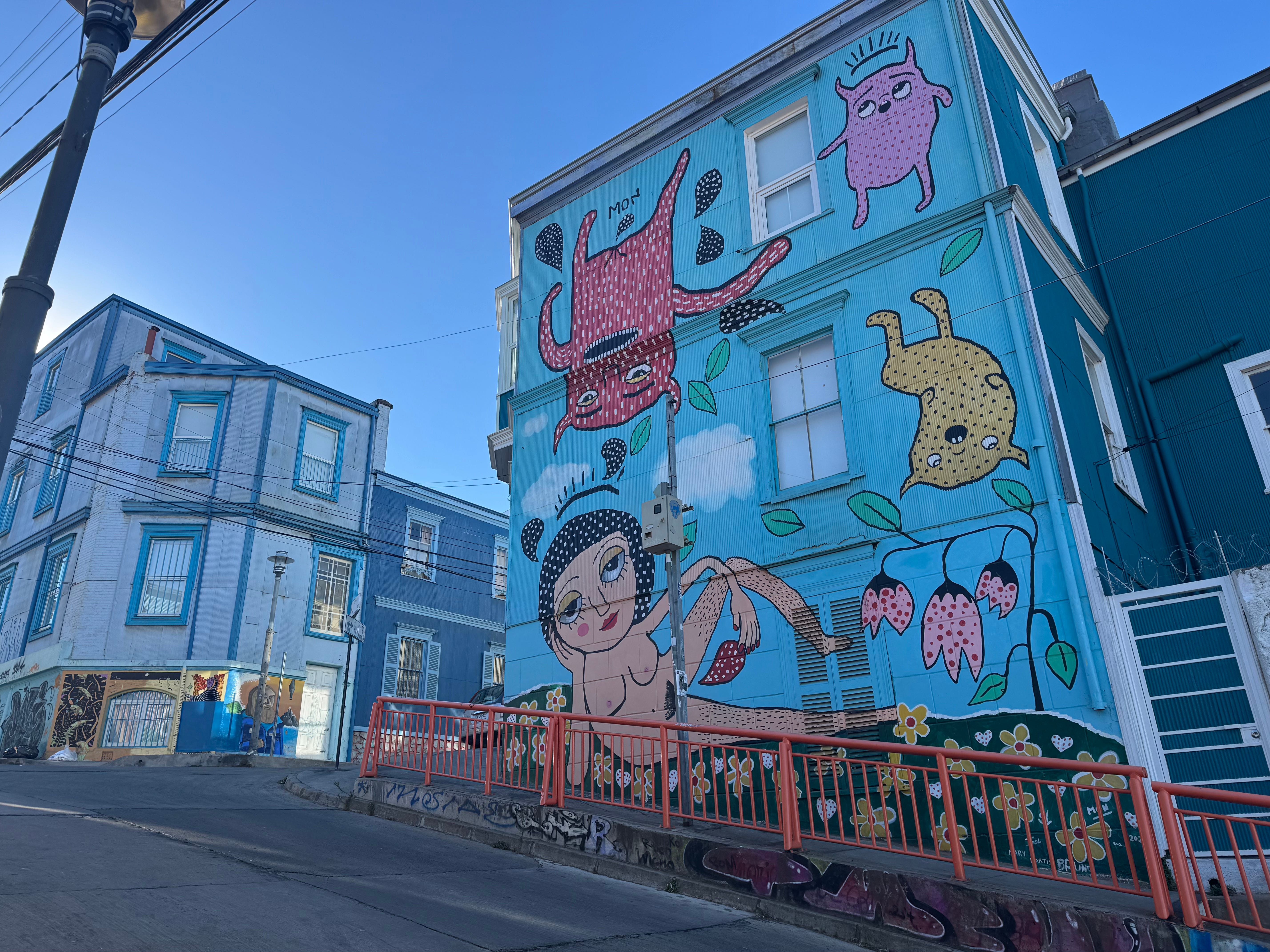
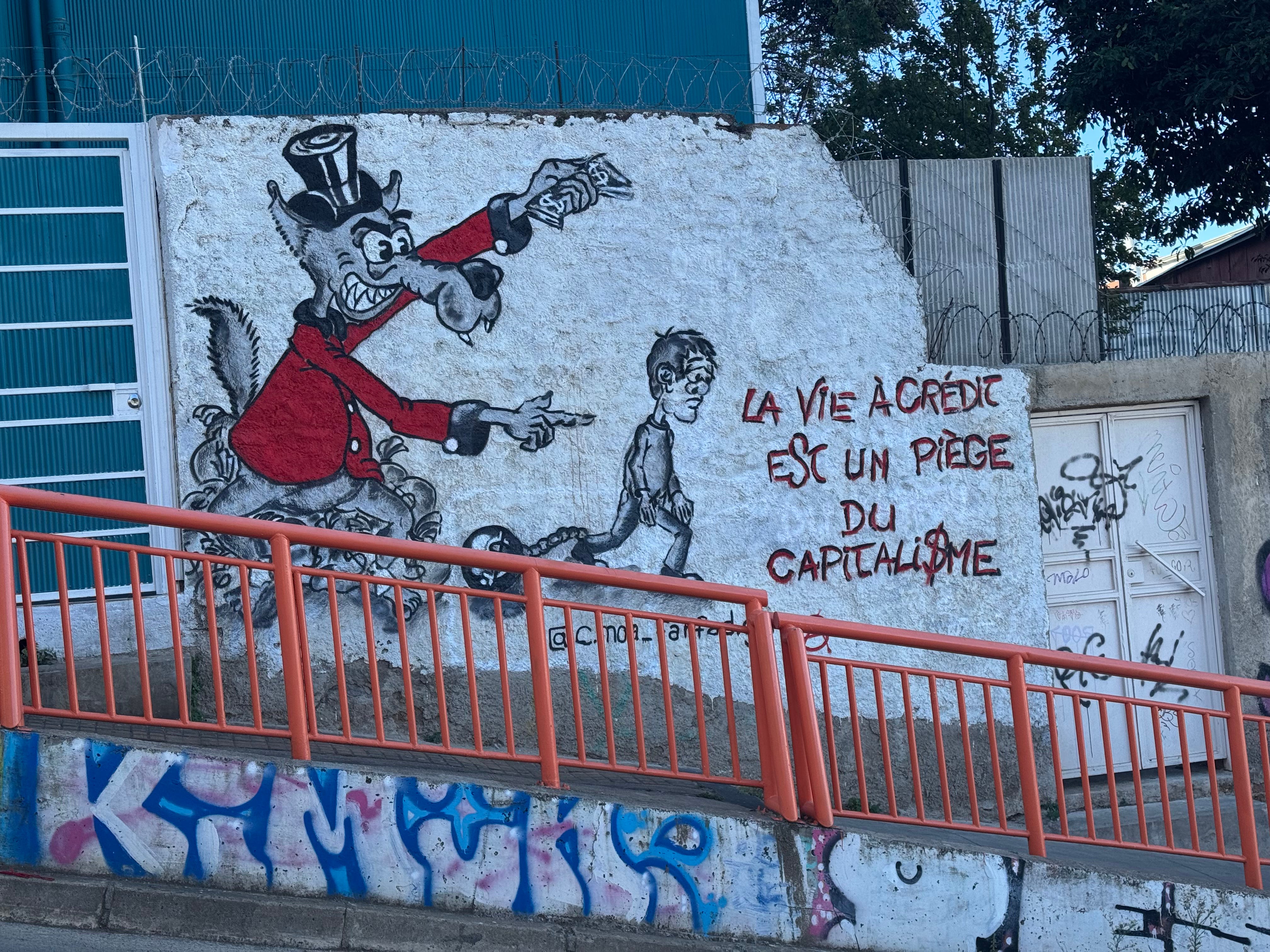
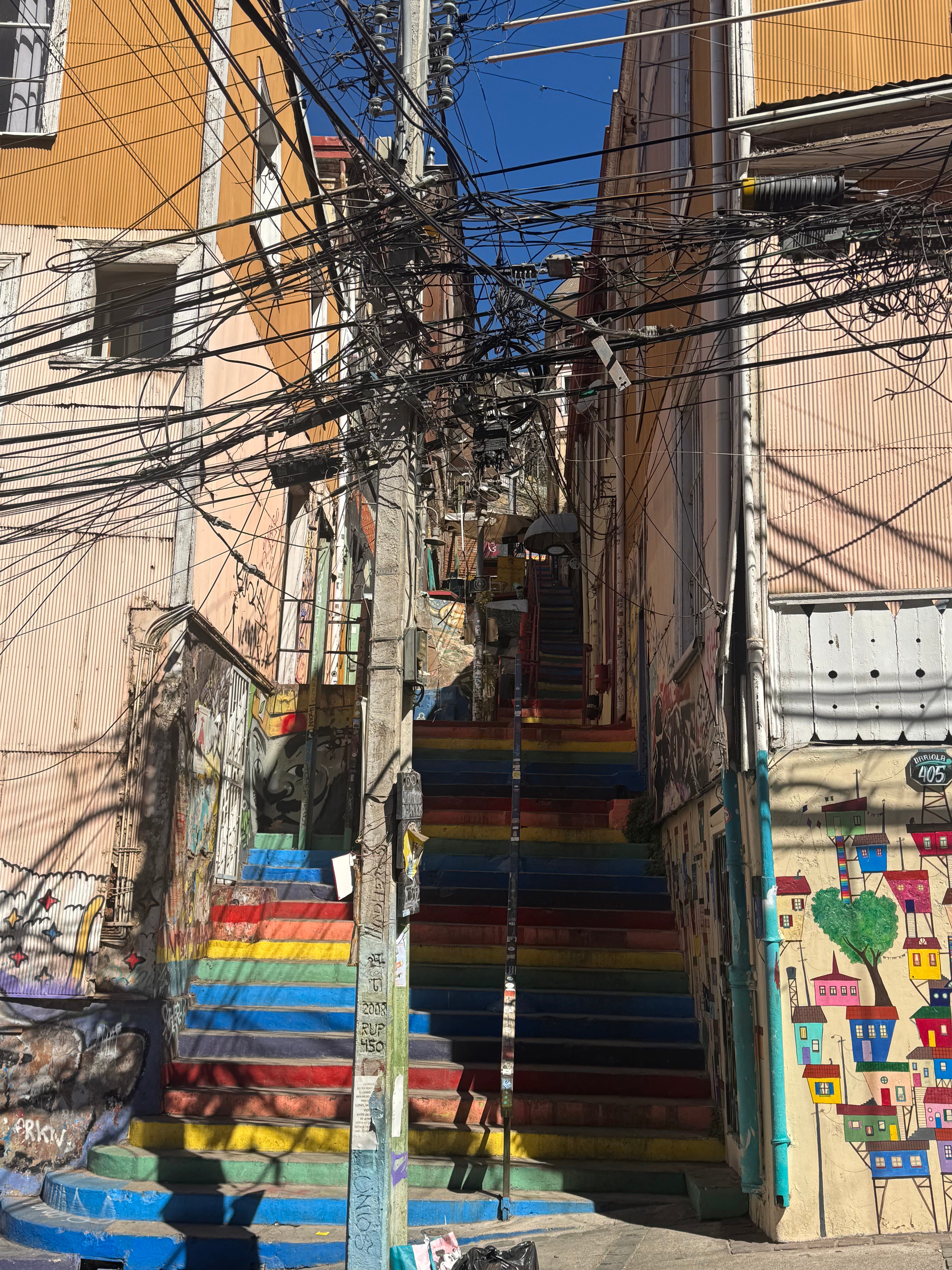
We join groups of gawkers snapping photos of the walls. Painting of local history, of the people who made this place, of injustices. We sit on the bright, terraced steps - all tropical colors, one per step, climb the tight space between homes. We make our way down to the sea, where a tourist square is jammed between the gates of the working port. There is a street market under a hundred tents with people showing and selling. And people stealing. Pickpocketing is a big business on these streets. We have been warned to keep our hands in our pockets. I do.
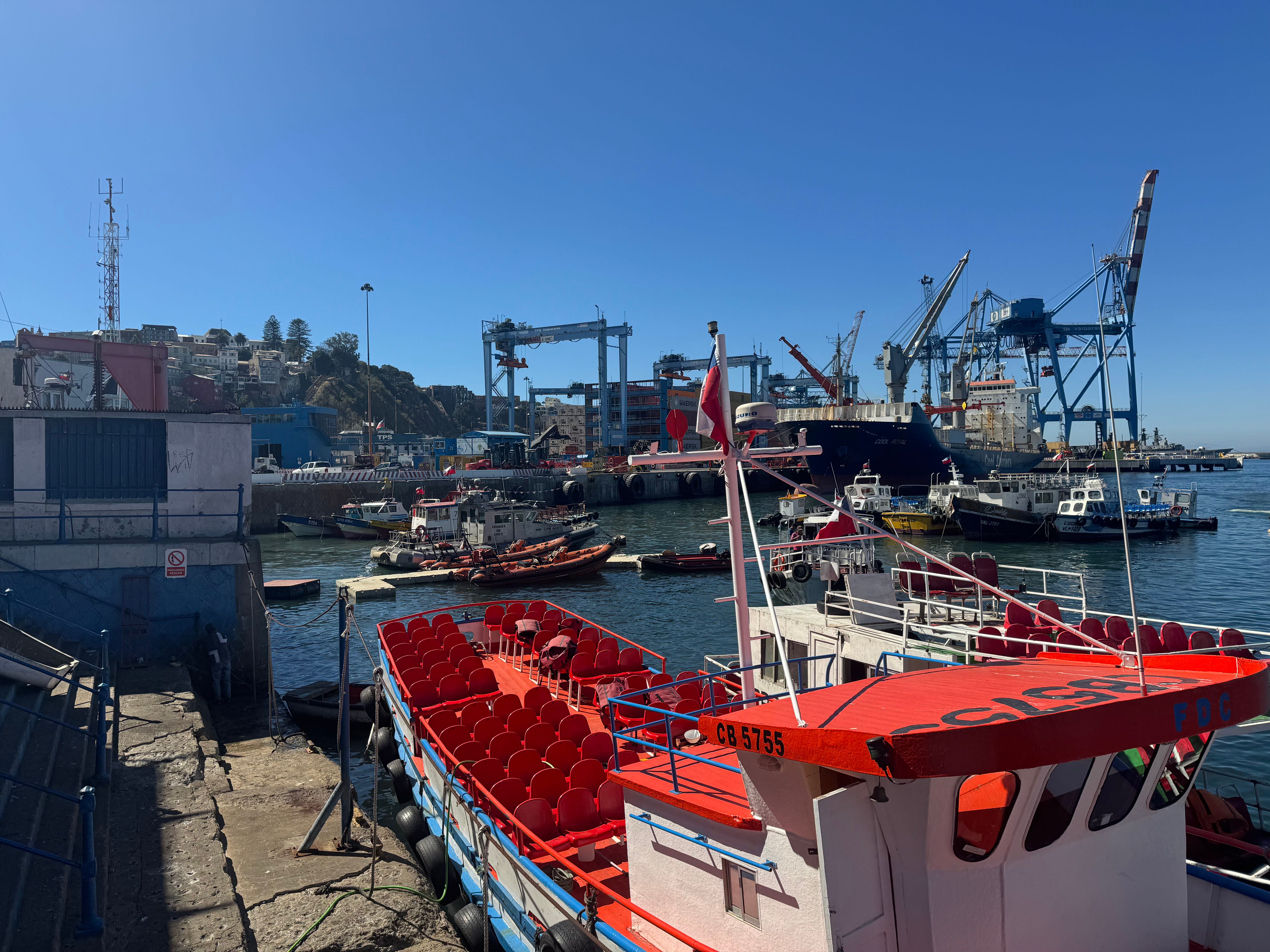
The fishing boats crowding the pier are imposters. They once plied the trade but replaced their working decks for rows of chairs, and replaced their fishing captains for full-throated marketers fishing for people to sail on the tour of the harbor. The tourist trade earns more cash.
The day rushes past. It lurches from noon to six in a blink, at the speed of this city. And it is time to leave. We climb the streets on our way from the port, but away from the standard tourist route. The buildings are still the same, but with more flaking paint and cages over windows. The dogs stick to their side of the street and watch us wearily. The streets are emptier here, but the few locals still greet us with a smile…
If you liked this piece, please Like and Restack. It makes a huge difference in helping us reach new readers. Thank you for your help!
Last 2 photos are fantastic! Always love your tours. ~J
I always appreciate it when people paint the buildings and streets of their city. It shows they feel attachment to the place.