

Authenticity, Ordered in English
On comfort, fear, and how we choose a street in a parallel economy

A sandwich or a chicken dish is about twelve dollars on First Street. The price is reasonable, even cheap, by the standards of Western countries where most tourists here call home. But one street over, in the local fondas, a similar dish is only five or six dollars a plate. Or less, if you want a truly local flavor.
First Street hugs the island shore in a gentle curve. Restaurants and hotels jut into the channel with a view of the islands of Solarte, Carenero, and Bastimentos. The tables in the busy season are filled with Europeans, Americans, Canadians, Latinos from the city, or from South America. The fondas of the parallel street are busy too, especially at lunch, but only with the locals who gather to eat hot soup in the heat of the day.
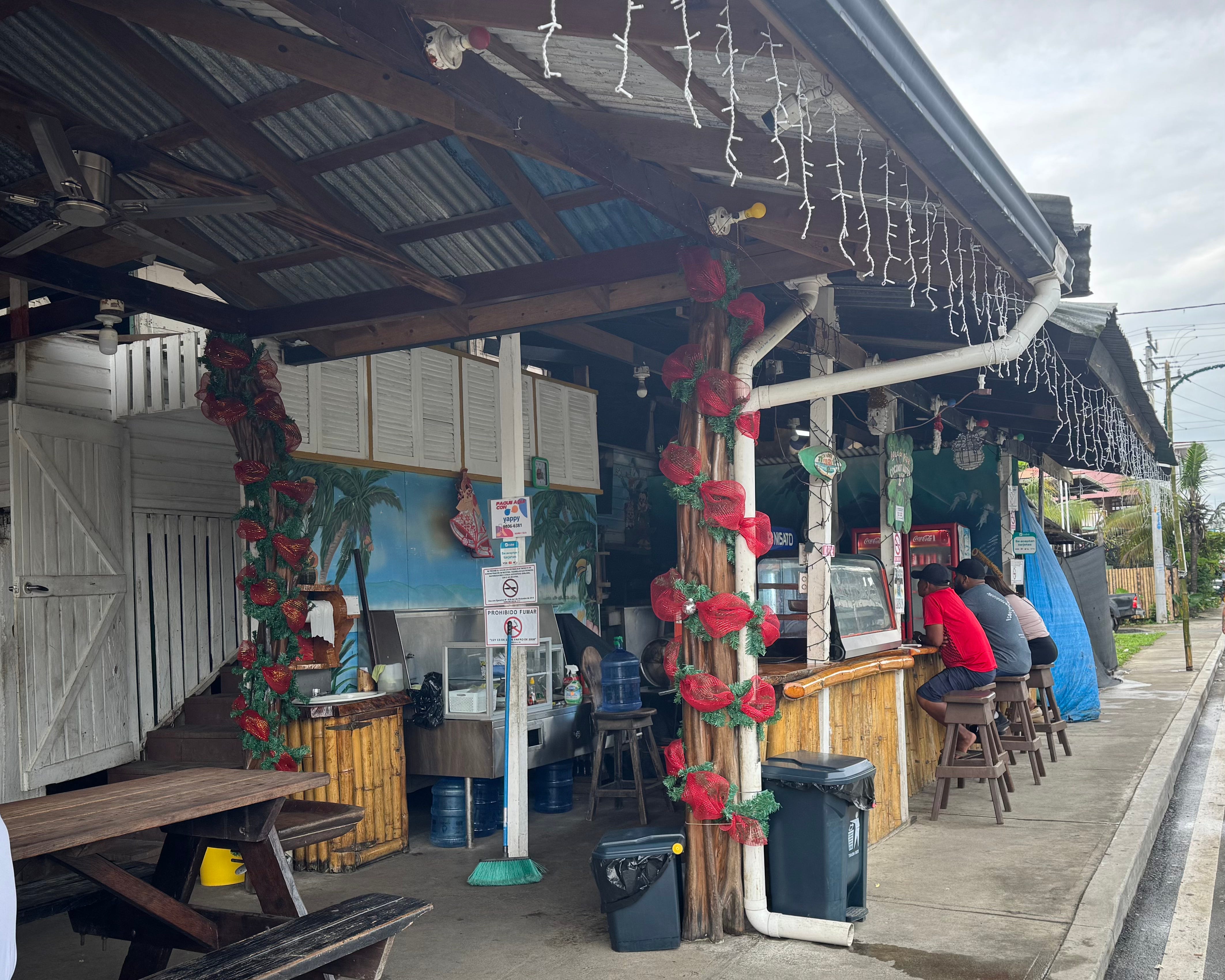
Why the locals don’t visit the first street is easy to explain. They can’t cross a block into a parallel economy where the prices and sanitized experience are out of their reach. Why the tourists rarely, if ever, visit the fondas on the second street is more perplexing. After all, the tourists I talk to crave authenticity, they insist. But then they revert to the familiar food they can order in English. They sip cocktails and look out onto the views, surrounded by their peers.
I understand. The first week of our stay in Panama, I brimmed with excitement to plunge into the local scene. The first day, we passed a fonda with the smell of grilled chicken, but without a menu, and a local cook chattering with someone in Spanish too fast for me to follow. We moved on and had a Texas sandwich from Tequila Republic instead.
The next day, we passed another fonda with the rich smell of fried plantains drifting in the smoke. We thought to sit down. But the distinct foreignness of indigenous faces ruffled our comfort. Their glances were friendly, welcoming even, but the sense of our own strangeness sharing the small patio shade pushed us on. We ate falafel at Bambuda instead, surrounded by European faces.
I thought about the ludicrous situation for the next three days. A fear of emotional discomfort clashing with a wish to experience life as a local. Silly, of course, but powerful. The same fear that keeps us from taking a step from comfortable to interesting, from rote to exciting, from familiar and into the less known, where the best experience is forged. It is hard to fight it, even with an understanding of its limiting chokehold.
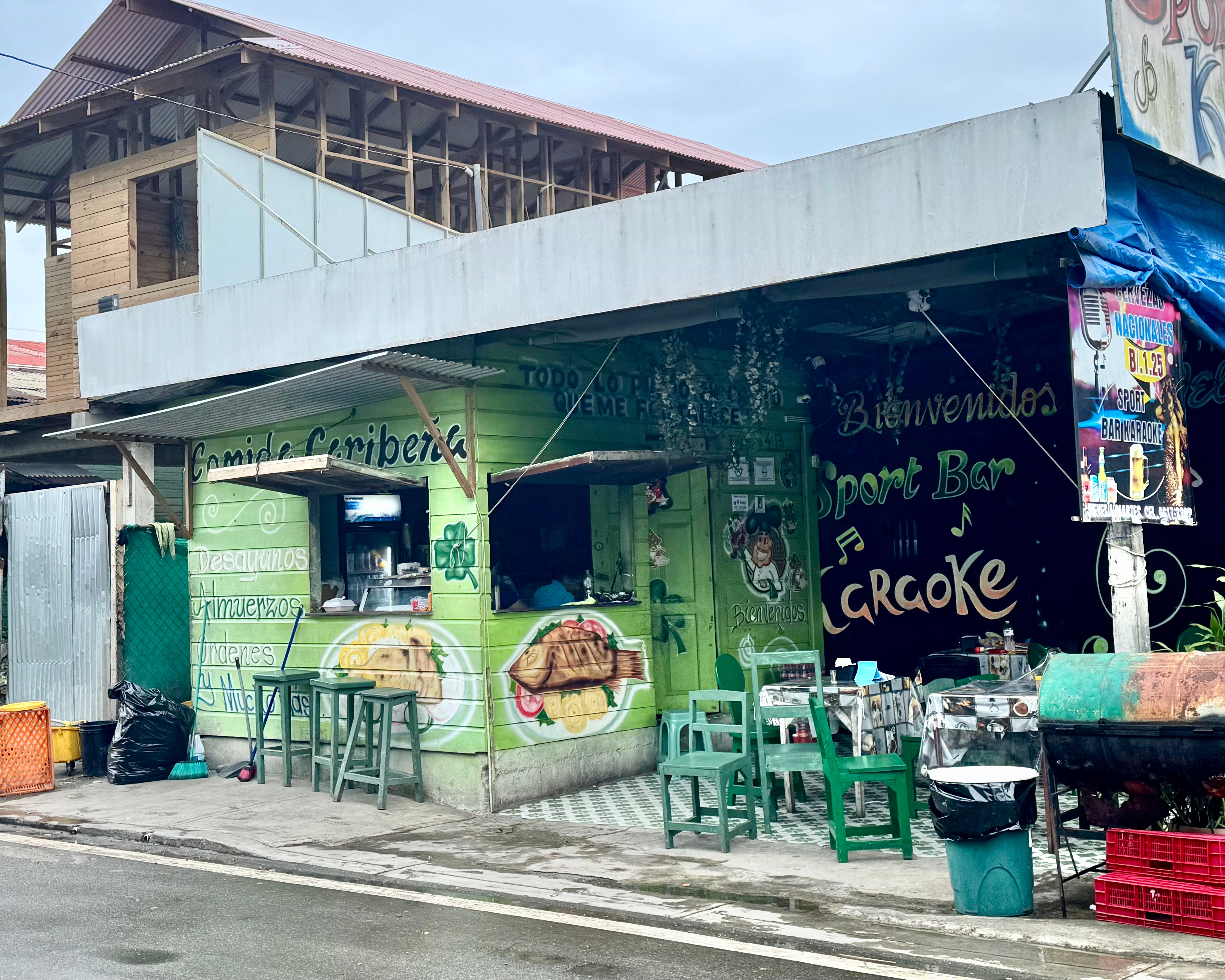
I would have scoffed at my own hesitancy before the travels. Impossible! Of course, I will try new things! But then the idealized expectation of a place crashes against a dirty table. The Western fixation on food safety collides with the bare hands of the local cooks pulling the chicken off the bone. Then, it is easy to swing back to what we know and pay triple for the comforts of familiarity.
The good news is that such nonsense does not last. Most of us make a decision to choose adventure if the option stays in front of us. But it does not come easy. And the door may shut before we build the courage to walk through it.
Today, I like the local fondas! The food tastes great, and the service is honest. The prices are a fraction of those at the restaurants on First Street. In week’s time, we broke through the barrier of our own fear. After, we visited the fondas regularly. Once every other week or so. Why not more often?
Well, the food is only Panamanian. Tasty, but similar from place to place. And we Westerners have grown used to the privilege of choice and variety. Today, we have Panamanian, tomorrow it is Italian or Japanese. It is indulgent, indeed, but the reality I rarely question.
Three weeks ago, on Mother’s Day, a panga full of locals pulled up to Bambuda. Indigenous men and women climbed onto the dock, then sat down around a long table. Twelve of them. Maybe a family, or maybe friends. They ordered colorful drinks and martinis and food. They talked and passed appetizers to try.
We left before they did. On the walk home, I considered that the boundary between the parallel economies is more porous than I suspected. The money flows in both directions. Each time we eat at a local fonda, we contribute to the locals’ ticket to take a trip to the other side. Maybe someday, these parallel economies will no longer just slide past each other, but will mix in an equilibrium of relative prosperity.
If you liked what you read, please help us reach new readers - Like and Restack. Thank you!!
It's strange how people feel anxiety at eating food in unfamiliar settings. I've concluded that there is some primal instinct that kicks in, the fear of putting something unknown inside your body (completely hypocritical, I know). There is also the anxiety of the language barrier: not knowing what is available or how to ask for it. But if both problems can be overcome, as you note, the financial advantage is obvious. The disparity in price in Thailand for food is huge. All it takes is a few Thai words and sitting in a plastic chair by the street to bring a meal down from $10 to $2.